顯示具有 Sexual Selection 標籤的文章。 顯示所有文章

2011年12月4日 星期日

由形態特徵重建新熱帶美洲蛺蝶Hamadryas屬之親緣關係並著重發聲結構的失去與其他替代性別辨識機制產生的討論

文獻來源:Garzo-Orduna, I. J. 2011. Phylogenetic evidence for loss of sound production and a shift in sexual recognition signals in Hamadryas butterflies (Nymphalidae: Biblidinae). Systematic Entomology. DOI: 10.1111/j.1365-3113.2011.00599.x

簡介

分布於新熱帶美洲的Hamadryas屬為蛺蝶科Biblidinae亞科類群,共計有20個物種,當中約有近半數具有前翅發聲結構、少數具有雌雄翅紋二型性與雄蟲具發香鱗片的種類。由過去的生物學顯示此屬辨識特徵尚有翅背面如花部狀紋路、吸食腐敗果實、停棲時頭下尾上以及飛行路徑飄忽不定。

過去30年間雖然有此屬的屬內歸群處理,然而尚未有以支序學所建立的親緣關係研究,本文章即首次以形態特徵重建親緣,並討論以下議題:(1) Hamadryas是否為一單系枝系,具有哪些衍徵來支持?(2) 此屬姊妹群為何? (3) 評估過去所建立亞屬之單系性;(4) 演化上如發聲、二型性與發香鱗等特徵出現與先後的判定與討論。

結果討論顯示

(1) Hamadryas屬為單系群;

(2) 此屬姊妹群為Ectima屬;

(3) 除了H. laodamia枝系外其餘過去之屬內亞屬歸群皆非單系群;

(4) 在發聲、二型性與發香鱗等特徵的演化上,發聲結構在特徵分析中被拆解為獨立的四個前翅翅脈特徵,然而能夠發聲的行為僅產生過一次(單一起源),該枝系當中的H. laodamia與其近緣種則再次失去此發聲結構。雖然H. laodamia枝系失去發聲能力,此支系卻擁有雄蟲發香鱗與翅型/翅紋雌雄二型性的特徵。作者因此認為若發聲行為是作為物種辨識用,則失去發聲行為的枝系則以發香鱗與二型性等特徵替代辨識。目前尚不清楚此三特徵組的出現順序,待後續研究。

(5) 藉由親緣關係樹所得之雌雄二型性特徵分佈,作者也比對此結果是否符合過去三個雌雄二型性起源假說(註)之一。由於雌雄二型性枝系H. laodamia的雌蟲翅紋為祖徵,而雄蟲翅紋為衍徵,因此雖然沒有直接的證據支持,此結果仍較符合達爾文所提出的雌蟲偏好特定雄蟲特徵的假說;

(6) 由於所重建之親緣關係樹整體樹型支持度不高,後續仍有待幼蟲形態資訊以及分子證據的加入,此外對於雌雄蟲辨識所利用特徵的方式,則需要更詳盡的野外觀察與網室試驗來解釋。

註:過去三個主要之雌雄二型性起源假說

(1) 達爾文 (1971) - 性擇假說,由雌性偏好與特定雄性產生後代的選汰方式達成;

(2) 華萊士 (1889) - 天擇假說:雌性儘可能產生隱蔽自身的形狀、斑紋等(相對於祖先型者)來增加適存值;

(3) Silberglied (1984)- 雄性間互動假說:雄性藉由視覺來辨識其他雄性個體的物種異同,並用以對同種雌性進行展示。

Abstract

The neotropical butterfly genus Hamadryas Hubner comprises 20 species that exhibit an intriguing variation in their natural history traits. Although revised in 1983, no phylogenetic hypothesis was presented: the first phylogenetic hypothesis is estimated here based on 93 characters and including species from the three other genera in the tribe Ageroniini. The phylogeny is used to test the monophyly of the genus, establish the sister group of Hamadryas and identify its apomorphies. The tree allows the inference of patterns of character change in sound production and sexual dimorphism. Implied weights show that Hamadryas is monophyletic and corroborate Ectima Doubleday as a sister genus. Previously suggested subgenera for Hamadryas were non-monophyletic, with the exception of the laodamia clade, supported by the presence of a complete sterigma. Sound production is inferred to be a derived condition in Hamadryas that has been lost in the laodamia clade. This, plus the presence of androconial organs and sexual dimorphism in the laodamia clade, suggests a shift in sexual recognition signalling. Furthermore, the phylogeny indicates that the colour pattern of males in the laodamia clade is novel, supporting a Darwinian origin of sexual dimorphism.

2011年1月6日 星期四

天冷 雌蝶就會從被追逐者變成求愛者

天冷 雌蝶就會從被追逐者變成求愛者 2011-01-07
【中廣新聞/夏明珠】

昆蟲的求愛行為,會因為氣候而產生變化,研究發現,在溫暖潮濕的氣候中,蛻變出的蝴蝶,兩性關係比較傳統,都是雄蝶擔任求愛的角色,可是當天氣變得乾燥涼爽,雌蝶就會化被動為主動,開始追逐雄蝶。

耶魯大學的研究團隊觀察非洲一種黃褐斑蝶(事實上是一種眼蝶Bicyclus anynana),他們發現,蝴蝶在求愛的時候,身上的花紋會變得比較亮,這是人類用肉眼辨識不出來的,不過蝴蝶可以,這就好比一輛燒包車,在追求異性中,可以發揮的功能。

研究人員解釋說,昆蟲交配及產卵的時間非常緊迫,所以牠們一點時間都無法浪費,必須快馬加鞭。蝴蝶交配的時候,雄蝶在精子之外,還會釋放營養素給雌蝶,由於天氣涼爽乾燥的時候,環境中的資源也比較少,這些營養素對雌蝶分外重要,也因此,牠們會盡可能增加求愛對象,爭取最多的資源,翅膀紋路最亮麗的雌蝶,通常成功率也愈高。

文獻來源: Prudic KL, Jeon C, Cao H, Monteiro A. 2011. Developmental Plasticity in Sexual Roles of Butterfly Species Drives Mutual Sexual Ornamentation. Science 331(6013): 73-75. [link]

2009年5月26日 星期二

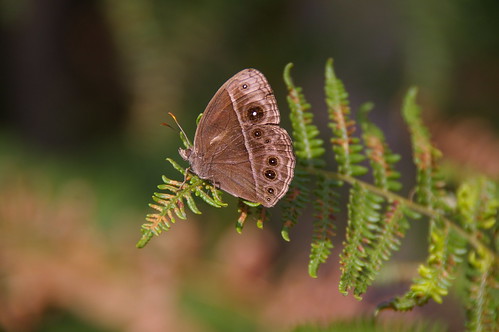
從大顆蛋孵出來的兒子比較會生?

photo by nicc776
Correlated responses to selection on female egg size in male reproductive traits in a butterfly
Evol Ecol (2009) 23:389–402
DOI 10.1007/s10682-007-9233-1

Klaus Fischer / Katja Zimmer / Nina Wedell

雌性與雄性特徵之間的遺傳關聯可能成為演化上的限制,如果該特徵與生殖有關,則對性擇具有潛在的影響。針對熱帶蝴蝶Bicyclus anynana以人為方式對進行卵的尺寸進行選汰的實驗得到高度分岐的品系。作者在此報導雄性特徵的關聯演化證據。來自大型卵品系的雄蝶具有顯著較茂盛的精莢,此與體型大小無關,且傾向比來自小型卵的雄蝶在生殖道中儲存更多的可孕精子。這可能造成兩性之間與生殖有關且被低估的遺傳關聯。然而,不孕的精子數量與睪丸的尺寸不受卵大小選擇的影響。在一個未受選汰族群中、表型關聯性顯示精莢的重量與可孕精子的數量(而非睪丸尺寸與不孕精子的數量)分別與雄性身體大小呈正相關,且那些較大的精莢含有較多的可孕精子、而非不可孕精子。此外,雄性提供較大的精莢與較多可孕精子給體型較大的雌性,暗示雄性可能在交配中行使交配選擇。

Abstract

Genetic correlations between male and female traits can act as evolutionary constraints and, if involving reproductive traits, potentially influence sexual selection. Artificial selection on egg size in the tropical butterfly Bicyclus anynana has yielded highly divergent lines. Here we report evidence for correlated evolution in male traits. Males from the large-egg selected lines produced significantly heavier spermatophores independent of body size and tended to have more fertile sperm stored in their reproductive tracts than those from the small-egg selected lines. This may be due to an underlying genetic correlation in reproductive effort between the sexes. However, non-fertile sperm number and testis size remained unaffected by selection on egg size. Phenotypic correlations within an unselected population revealed that spermatophore mass and fertile sperm number, but not testis size and non-fertile sperm number, were positively related to male body size, and that larger spermatophores contained more fertile, but not non-fertile sperm. In addition, males provided larger females with bigger spermatophores and more fertile sperm, indicating males may be exercising mate choice during copulation.