顯示具有 barcode fragment 標籤的文章。 顯示所有文章

2011年3月14日 星期一

Archaeoattacus屬天蠶蛾隱蔽種的證據

圖: 左上為Ar. edeardsii 右上為 Ar. malayanus 圖下為Ar. staudingeri圖片引用自原發表文章

文獻來源: Wolfgang A. Nässig, Stefan Naumann, and Rodolphe Rougerie. 2010.
Evidence for the existence of three species in the genus Archaeoattacus (Lepidoptera: Saturniidae). The Journal of Research on the Lepidoptera 43: 37-47.
[full pdf]

文章簡介
Archaeoattcus屬的模式種為Ar. edwardsii (Watson, 1895),同屬的另外一種Ar. staudingeri亦由Watson在1914年時所發表,但當時此兩種都被放在Attacus中,直到五十年後Seitz等人在Attacus下建立了Archaeoattacus這個亞屬,並同時描述了一個亞種Ar. edwardsii malayanus,但是這個亞種由於沒有穩定且令人信服的特徵,再加上它在非馬來地區的亞洲大陸廣泛分布,最後被當成Ar. edwardsii的同物異名,但是Nässig等人於2010年提出了新的證據,包含了以生命條碼技術以及一些細微的雄性生殖器穩定差異,證實了確實有第三種的存在。所以原被當成同物異名的亞種名,被復活使用且提升為種Ar. malayanus。除此之外,分子證據還支持Ar. malayanus與Ar. staudingeri較為接近,而在生殖器的形態上,兩者幾乎沒有差別。

2010年6月17日 星期四

中南美洲經濟害蟲Copitarsia decolora的隱藏種

文獻來源:Simmons RB, Scheffer SJ. 2004. Evidence of cryptic species within the pest Copitarsia decolora (Guenee) (Lepidoptera : Noctuidae). Annals of the Entomological Society of America 97: 675-680. [abstract]
簡介
Copitarsia decolora是分布於中美洲以及南美洲的廣食性的經濟害蟲,在本篇文章中作者觀察到此物有種雄性個體的形態變異,藉由比對其粒線體細胞中的細胞色素(COI)分子序列,發現C. decolora可能包含了兩個隱藏種,且此兩個隱藏種與其同屬的C. naenoides為併系群,除了分子上的證據,C. decolora與隱藏種間在生殖器的抱器結構上也有差異,但在地理分布上C. decolora與隱藏種間並無區隔。C. decolora可能需要分類上的變革,但在那之前需要更多支持的證據。

2010年4月13日 星期二

利用生命條碼技術確認一種捲蛾的廣食性與確認該研究中另一種捲蛾的分類地位

image superlinked from this site

Sources: Hulcr J, Miller SE, Setliff GP, Darrow K, Mueller ND, Hebert PDN & Weiblen GD. (2007) DNA barcoding confirms polyphagy in a generalist moth, Homona mermerodes (Lepidoptera: Tortricidae). Molecular Ecology Notes 7: 549-557. [abstract] Miller SE, Helgen LE & Heber PDN. (2010) Clarification of the identity of Homona salaconis (Lepidoptera: Tortricidae). Molecular Ecology Resources 10: 580. [abstract]

簡介
生命條碼技術(DNA barcoding)應用在許多為人所知的昆蟲分類上,已經顯示在許多被命名的種類中,仍可能有隱藏種。本篇文章使用一種捲蛾,Homona mermerodes,藉由其寄主記錄與生命條碼的DNA片段的haplotype多樣性,藉以評估其分類與鑑定。H. mermerodes在利用不同寄主植物個體的遺傳分化程度比起其他Homona屬內種間的分化程度為低。新幾內亞與澳洲間的個體,不同haplotype間的遺傳分化低於種間的分化程度。生命條碼能夠用於鑑定廣為人知的植食性昆蟲,也能夠用以發掘隱藏種,這個方法也同樣的能夠用來鑑定使用不同寄主植物的物種是否為相同物種。本篇指定了一個新的選模標本,並且首次總結其生物地理與雄性生殖器特徵。DNA鑑定之後,在上篇的文章中,作者們選用了Homona的分布於新幾內亞其中一種,但當時無法取得足夠的分類資訊,於是當時將該種暫定為Homona sp. nr. salaconis,而真正的H. salaconis分布於菲律賓,而後作者們取得菲律賓的標本,同樣分析其DNA條碼片段,發現菲律賓的樣本內有0.15%的差異,而與新幾內亞的種類有3.30-4.28%的差異;同時比較型態的差異,作者們推斷H. sp. nr salaconis應與H. salaconis為不同種。藉由比對大英自然史博物館的標本,H. sp. nr salaconis應為H. auriga,這個種名目前是H. salaconis的一個同物異名,但根據目前結果應該被復活使用。

2010年4月10日 星期六

種化是由寄主驅動還是地理隔絕?以DNA條碼進行生態群聚間的族群遺傳比較

文獻來源:KJ Craft, SU Pauls, K Darrow, SE Miller, PDN Hebert,, LE Helgen, V Novotny, GD Weiblen. 2010. Population genetics of ecological communities with DNA barcodes: An example from New Guinea Lepidoptera. Proceedings of the National Academy of Science 107(11):5041-5046.

對生態上同功群的比較族群遺傳結構可反映出關於群聚多樣性的起源與維持之差異模式的通性。新幾內亞與美洲的熱帶鱗翅目寄主專一性與生態系間物種多樣性之間矛 盾的評估,已點燃了解釋多樣性隨緯度呈梯度變化之爭論:是由寄主植物互動造成分化?或是地理隔絕?作者由新幾內亞的八個地點與分屬於四個屬的寄主植物上選 取28種鱗翅目昆蟲,對共計1359個個體選取粒線體COI基因進行基因型分析,並評估族群分化與寄主植物和地理之關係。分子差異與基因型網狀分析顯示生 態上相似的同域物種其遺傳結構樣式有變化。有四分之一缺乏距離隔離或寄主互動造成的變異,但也有21%兩者兼具。14%的物種存有寄主互動造成的變異但不 具地理隔絕,而18%的物種則正好相反,另外21%的結果則模稜兩可,故目前結果看來,分子差異與基因型網狀分析得到的是 不相容的結果。群聚成員之間食性寬廣度的差異推測食性專一所造成的種化機制是重要的,但對熱帶鱗翅目的分化而言並非是普遍通行的。而地理廣 布的基因型則挑戰了割據生物地理學的預測。播遷是重要的,而鱗翅目的群聚則隨其組成物種的不同親緣地理歷史表現出頗高的動態變化。主要熱帶區與溫帶區的草 食者之間的族群遺傳仍有待測試其生態學理論和評估全球生物多樣性樣式之預測。

Comparative population genetics of ecological guilds can reveal generalities in patterns of differentiation bearing on hypotheses regarding the origin and maintenance of community diversity. Contradictory estimates of host specificity and beta diversity in tropical Lepidoptera (moths and butterflies) from New Guinea and the Americas have sparked debate on the role of host-associated divergence and geographic isolation in explaining latitudinal diversity gradients. We sampled haplotypes of mitochondrial cytochrome c oxidase I from 28 Lepidoptera species and 1,359 individuals across four host plant genera and eight sites in New Guinea to estimate population divergence in relation to host specificity and geography. Analyses of molecular variance and haplotype networks indicate varying patterns of genetic structure among ecologically similar sympatric species. One-quarter lacked evidence of isolation by distance or host-associated differentiation, whereas 21% exhibited both. Fourteen percent of the species exhibited host-associated differentiation without geographic isolation, 18% showed the opposite, and 21% were equivocal, insofar as analyses of molecular variance and haplotype networks yielded incongruent patterns. Variation in dietary breadth among community members suggests that speciation by specialization is an important, but not universal, mechanism for diversification of tropical Lepidoptera. Geographically widespread haplotypes challenge predictions of vicariance biogeography. Dispersal is important, and Lepidoptera communities appear to be highly dynamic according to the various phylogeographic histories of component species. Population genetic comparisons among herbivores of major tropical and temperate regions are needed to test predictions of ecological theory and evaluate global patterns of biodiversity.

2009年8月24日 星期一

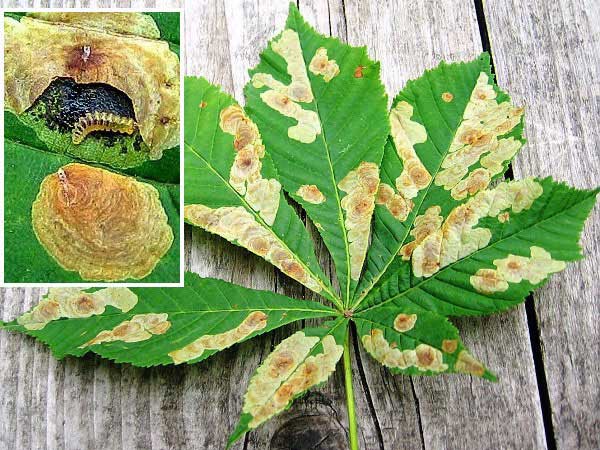
粒線體與微衛星體DNA標記顯示具高入侵性的七葉樹潛蛾起源自巴爾幹半島

圖片來源:dendro.mojzisek.cz
Mitochondrial and microsatellite DNA markers reveal a Balkan origin for the highly invasive horse-chestnut leaf miner Cameraria ohridella (Lepidoptera,Gracillariidae)

文獻來源: Valade R, Kenis M, Hernandez-Lopez A, Augustin S, Mari Mena N, Magnoux E, Rougerie R, Lakatos F, Roques A, Lopez-Vaamonde C. 2009. Mitochondrial and microsatellite DNA markers reveal a Balkan origin for the highly invasive horse-chestnut leaf miner Cameraria ohridella (Lepidoptera, Gracillariidae). Molecular Ecology 18(16): 3458 - 3470. [Abstract]

生物入侵通常始於少量的創始者個體。創始者很可能只表現出來源族群一小部分的遺傳多樣性。本研究以遺傳方式追蹤七葉樹潛蛾(Cameraria ohridella,一種起源地未明的入侵性小鱗翅目昆蟲)的地理起源。自從25年前在馬其頓的發現後,這種昆蟲經歷了爆炸性的向西擴張,日益拓殖到整個中歐與西歐。作者使用COI序列(DNA條碼片段)與一組六個多型性的微衛星體去評估七葉樹潛蛾族群的遺傳變異,並測試七葉樹潛蛾起源自南巴爾幹半島(阿爾巴尼亞、馬其頓和希臘)的假說。來自88的地點共486個樣本的mtDNA讓我們鑑定出了25個地理結構上的單體型。此外,來自歐洲與南巴爾幹半島的 16個族群、共480個個體在基因上被找出6個多型性的微衛星體基因座。單體型具有高多樣性而核甘酸多樣性測量值低、包括顯著負相關的 Tajima’s D指數,表示七葉樹潛蛾在擴散橫越歐洲時曾經歷快速的族群擴張。粒線體與微衛星體DNA均顯示來自歐洲人為棲地(如公園、花園中的植樹或道路兩邊的空地)的七葉樹潛蛾與來自南巴爾幹半島自然棲地的樣本相較,有遺傳多樣性減低的現象。作者根據以上發現推測,歐洲的七葉樹潛蛾族群的確源自於南巴爾幹半島。

Abstract
Biological invasions usually start with a small number of founder individuals. These founders are likely to represent a small fraction of the total genetic diversity found in the source population. Our study to trace genetically the geographical origin of the horse-chestnut leafminer, Cameraria ohridella, an invasive microlepidopteran whose area of origin is still unkown. Since its discovery in Macedonia 25 years ago, this insect has experienced an explosive westward range expansion, progressively colonizing all of Central and Western Europe. We used cytochrome oxidase I sequences (DNA barcode fragment) and a set of six polymorphic microsatellites to assess the genetic variability of C. ohridella populations, and to test the hypothesis that C. ohridella derives from the southern Balkans (Albania, Macedonia and Greece). Analysis of mtDNA of 486 individuals from 88 localities allowed us to identify 25 geographically structured haplotypes. In addition, 480 individuals from 16 populations from Europe and the sout ern Balkans were genotyped for 6 polymorphic microsatellite loci. High haplotype diversity and low measures of nucleotide diversities a significantly negative Tajima’s D indicate that C. ohridella has experienced rapid population expansion during its dispersal across Europe. Both mtDNA and microsatellites show a reduction in genetic diversity of C. ohridella populations sampled from artificial habitats (e.g. planted trees in public parks, gardens, along roads in urban or sub-urban areas) across Europe compared with C. ohridella sampled in natural stands of horse-chestnuts in the southern Balkans. These findings suggest that European populations of C. ohridella may indeed derive from the southern Balkans.

Keywords: Aesculus hippocastanum, Balkans, Cameraria ohridella, genetic bottleneck, invasion, phylogeography

Received 11 September 2008; revision received 26 May 2009; accepted 30 May 2009

2009年8月21日 星期五

共域分布但利用不同寄主植物的蝶類隱藏種群為異域起源

文獻來源: McBride CS, Velzen RV & Larsen TB. 2009. Allopatric origin of cryptic butterfly species that were discovered feeding on distinct host plants in sympatry. Molecular Ecology 18(17): 3639-3651. [Abstract]

近年熱帶昆蟲的研究持續發現隱藏種-意指由於形態近似,過去被歸類為同一種,但其實具生殖隔離的不同物種。然而此類研究大多局限於單一地點,因此對於這些隱藏種的地理分布與種內變異所知極為有限,這也造成在推測何種力量促成此多樣性時的困難。例如在許多廣食性的植食或寄生昆蟲被發現實為多種專食性物種的研究中,寄主轉移被認為與種化有關,但是寄主轉移發生於何時、何地?是否受到地理隔離的幫助?此研究使用最近於西非喀麥隆中部被發現,利用不同寄主植物,且在過去被認為皆屬Cymothoe egesta的兩個隱藏種蛺蝶來回答這些問題。作者群首先利用粒線體DNA的COI片段,試圖區分採自兩種不同寄主植物上的個體,再擴及所有採自泛熱帶非洲區的個體。結果出乎作者的意料之外,這兩種蛺蝶的分布格局幾乎是異域的,僅在初次被發現兩者共域的西非中部有小範圍的交集,再加上遺傳變異的分析結果,顯示分化過程應為異域種化,發生的時間可能在更新世。作者最後探討在理解新近於熱帶非洲發現的隱藏種種化時,此研究結果的意義何在,並認為在地理分布模式與寄主利用的課題上需要更多研究投入。

Abstract
Surveys of tropical insects are increasingly uncovering cryptic species – morphologically similar yet reproductively isolated taxa once thought to comprise a single interbreeding entity. The vast majority of such species are described from a single location. This leaves us with little information on geographic range and intraspecific variation and limits our ability to infer the forces responsible for generating such diversity. For example, in herbivorous and parasitic insects, multiple specialists are often discovered within what were thought to be single more generalized species. Host shifts are likely to have contributed to speciation in these cases. But when and where did those shifts occur, and were they facilitated by geographic isolation? We attempted to answer these questions for two cryptic species within the butterfly Cymothoe egesta that were recently discovered on different host plants in central Cameroon. We first used mtDNA markers to separate individuals collected on the two hosts within Cameroon and then extended our analysis to incorporate individuals collected across the entire pan-Afrotropical range of the original taxon. To our surprise, we found that the species are almost entirely allopatric, dividing the original range and overlapping only in the narrow zone of West-Central Africa where they were first discovered in sympatry. This finding, combined with analyses of genetic variation within each butterfly species, strongly suggests that speciation occurred in allopatry, probably during the Pleistocene. We discuss the implications of our results for understanding speciation among other cryptic species recently discovered in the tropics and argue that more work is needed on geographic patterns and host usage in such taxa.

2008年10月6日 星期一

[Article]Widespread decoupling of mtDNA variation and species integrity in Grammia tiger moths

Widespread decoupling of mtDNA variation and species integrity in Grammia tiger moths (Lepidoptera: Noctuidae)

Authors: SCHMIDT, B. CHRISTIAN; SPERLING, FELIX A. H.1

Source: Systematic Entomology, Volume 33, Number 4, October 2008 , pp. 613-634(22)

Publisher: Blackwell Publishing

Abstract: We investigate the diversity of the North American tiger moth genus Grammia Rambur (Lepidoptera: Noctuidae) by comparing mitochondrial DNA (mtDNA) `barcode' fragments of cytochrome oxidase I with non-molecular characters such as morphology, ecology, behaviour and distribution. Mitochondrial DNA genealogy is strikingly at odds with morpho-species taxonomy for most of the 28 sampled species, as haplotypic polyphyly not only is taxonomically widespread, but involves multiple shared haplotypes among two to four species. Morpho-ecological traits show that those species sharing haplotypes are often not closely related. Furthermore, high mtDNA divergences occur within species. Haplotypic variation is highly discordant with species taxonomy, but variation at a continental scale reveals significant geographic structuring of haplogroups, transcending morpho-species boundaries. A nested clade analysis and comparison of non-molecular with mtDNA data indicate that most discordance between mtDNA and taxonomy in Grammia is explained best by taxonomically and geographically widespread ongoing hybridization events resulting in mtDNA introgression. We hypothesize that broad areas of sympatry, interspecifically compatible genitalic structure, and species overlap in pheromone components facilitate hybridization, with disparate interspecies abundances promoting mitochondrial introgression. The molecular evolution of Grammia challenges the view that interspecific gene exchange occurs rarely and is restricted to recently diverged species. These results show the value of mtDNA in detecting cryptic hybridization, while highlighting the inherent dangers of drawing taxonomic conclusions based solely on mtDNA. Widespread decoupling of mtDNA variation and species integrity in Grammia tiger moths (Lepidoptera: Noctuidae)

[Article]Molecular phylogenetics of heliothine moths

Molecular phylogenetics of heliothine moths (Lepidoptera: Noctuidae: Heliothinae), with comments on the evolution of host range and pest status
Full Text: HTML, PDF (Size: 675K)
Authors: CHO, SOOWON; MITCHELL, ANDREW1; MITTER, CHARLES2; REGIER, JEROME3; MATTHEWS, MARCUS; ROBERTSON, RON

Source: Systematic Entomology, Volume 33, Number 4, October 2008 , pp. 581-594(14)

Abstract: The Heliothinae are a cosmopolitan subfamily of about 365 species that include some of the world's most injurious crop pests. This study re-assesses evolutionary relationships within heliothines, providing an improved phylogeny and classification to support ongoing intensive research on heliothine genomics, systematics, and biology. Our phylogeny estimate is based on two nuclear gene regions, namely elongation factor-1α (EF-1α; 1240 bp) and dopa decarboxylase (DDC; 687 bp), and on the barcoding region of mitochondrial cytochrome oxidase I (COI; 708 bp), providing a total of 2635 bp. These were sequenced for 71 heliothines, representing all major genera and nearly all recognized subgenera and species groups, and for 16 outgroups representing all major lineages of trifine Noctuidae. Analysis of the combined data by maximum likelihood, unweighted parsimony and Bayesian methods gave nearly identical topologies, and the individual gene trees showed only one case of potentially strong conflict. Relationships among genera and subgenera are resolved with strong bootstrap support. The earliest-diverging lineages (c. 200 species in total) consist almost entirely of host specialists, reflecting the inferred ancestral heliothine host range under parsimony. The remaining species form a clade - the Heliothis group - that includes most of the polyphages (30% of heliothines) and all of the major pests. Many other species in the Heliothis group, however, are host specialists. Our results extend previous efforts to subdivide this large clade, and show the most notorious pest groups, the corn earworm complex (Helicoverpa) and the tobacco budworm (Heliothis virescens) group, to be closely related, joining with a small oligophagous genus in what we term the major-pest lineage. Thus, genomic/experimental results from one model pest may extrapolate well to other pest species. The frequency of evolutionary expansion and contraction in host range appears to increase dramatically at the base of the Heliothis group, in contrast to the case for earlier-diverging lineages. We ascribe this difference provisionally to differential evolutionary constraints arising from contrasting life-history syndromes. Host-specific behaviour and crypsis, coupled with low fecundity and vagility, may discourage host-range expansion in earlier-diverging lineages. By contrast, in the Heliothis group, the absence of host-specific traits, coupled with high vagility and fecundity, may more readily permit expansion or contraction of the host range in response to varying ecological pressures such as host species abundance or differential competition and predation.