顯示具有 Bombycoidea 標籤的文章。 顯示所有文章

2012年4月9日 星期一

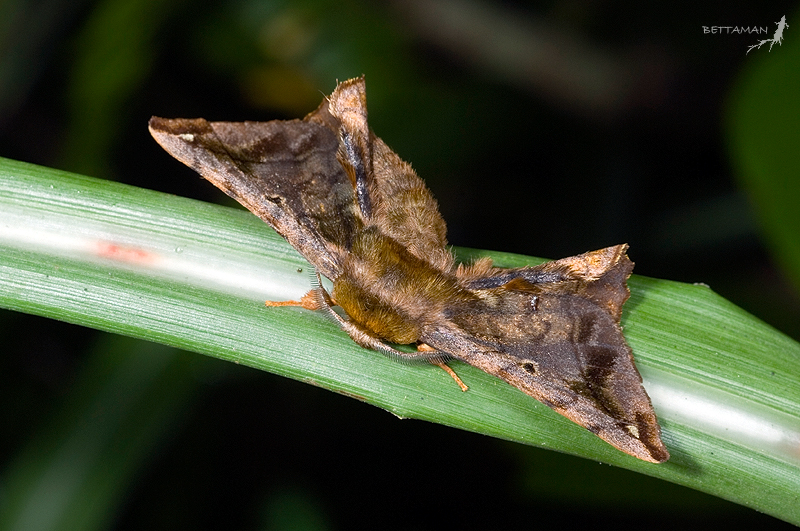
茶蠶蛾屬(Andraca)被拆成兩個亞屬了

文獻來源: Zolotuhin V. (2012) Taxonomic remarks on Andraca Walker, 1865 (Lepidoptera: Bombycidae) with descriptions of five new species. Zootaxa 3262: 22-34.

Abstract
The genus Andraca Walker, 1865, is divided into two subgenera, one of them new: Chrypathemola Zolt., subgen. nov. (type species Andraca apodecta Swinhoe, 1907). The following new species are described: Andraca draco, sp. nov. (from Java); Andraca lawa, sp. nov. (from Palawan), Andraca paradisea, sp. nov. (from Philippines), Andraca chrysocollis, sp. nov. (from Philippines) and Andraca (Chrypathemola) nobilorum, sp. nov. (from Vietnam). A male lectotype for Andraca bipunctata Walker, 1865 is designated from the collection of ZMHU; this designation led to the new synonymy: Andraca bipunctata Walker, 1865 = Andraca angulata Kishida, 1993, syn. nov. The systematics of the family Bombycidae is briefly discussed.

重點是: (1) 台灣真的沒有bipunctata, 農業文獻上的學名真的就是錯了; (2) 台灣產的茶蠶被置入Chrypathemola這個新亞屬中.

2011年3月14日 星期一

Archaeoattacus屬天蠶蛾隱蔽種的證據

圖: 左上為Ar. edeardsii 右上為 Ar. malayanus 圖下為Ar. staudingeri圖片引用自原發表文章

文獻來源: Wolfgang A. Nässig, Stefan Naumann, and Rodolphe Rougerie. 2010.
Evidence for the existence of three species in the genus Archaeoattacus (Lepidoptera: Saturniidae). The Journal of Research on the Lepidoptera 43: 37-47.
[full pdf]

文章簡介
Archaeoattcus屬的模式種為Ar. edwardsii (Watson, 1895),同屬的另外一種Ar. staudingeri亦由Watson在1914年時所發表,但當時此兩種都被放在Attacus中,直到五十年後Seitz等人在Attacus下建立了Archaeoattacus這個亞屬,並同時描述了一個亞種Ar. edwardsii malayanus,但是這個亞種由於沒有穩定且令人信服的特徵,再加上它在非馬來地區的亞洲大陸廣泛分布,最後被當成Ar. edwardsii的同物異名,但是Nässig等人於2010年提出了新的證據,包含了以生命條碼技術以及一些細微的雄性生殖器穩定差異,證實了確實有第三種的存在。所以原被當成同物異名的亞種名,被復活使用且提升為種Ar. malayanus。除此之外,分子證據還支持Ar. malayanus與Ar. staudingeri較為接近,而在生殖器的形態上,兩者幾乎沒有差別。

2011年2月16日 星期三

擴增基因序列取樣獲得蠶蛾總科高階親緣關係之穩定性

文獻出處: Zwick A., C. J. Regier, C. Mitter and M. P. Cummings. 2010. Increased gene sampling yields robust support for higher-level clades within Bombycoidea (Lepidoptera). Systematic Entomology. DOI: 10.1111/j.1365-3113.2010.00543.x


簡介

2008年由美國馬里蘭大學生物科技研究所Jerome C. Regier與現德國斯圖加特自然史博物館的Andreas Zwick博士等發表了針對蠶蛾總科與枯葉蛾總科親緣關係重建的研究。Regier等人選用50個蠶蛾總科、近緣枯葉蛾科與其他大鱗翅分類群,並取5段蛋白質轉錄基因序列(約6600鹼基對)進行親緣關係重建,然而此研究中蠶蛾總科並未獲得高支持度的單系性。


於2009年Cho等人利用多基因序列重建鱗翅目高階親緣關係,使超過10段基因所重建之親緣關係結果與其分析方法受到關注。Zwick等人此篇文章為了在實際經費與產出之間取得平衡,於是由2008年50個分類群中選取其中24個,將其基因額外增加20段蛋白轉錄基因(約11700鹼基對),也因此能評估分類群/分子序列取樣數差異對親緣重建所造成的影響。


作者將分類群/分子序列分為三組進行所得親緣樹之比較:

資料組 (A)- 50個分類群(非完全等同Regier等人2008年選用分類群)/5段序列

資料組 (B)- 50個分類群(同上述)/25段序列

資料組 (C)- 24個分類群/5段序列

結果顯示(B)(C)所重建之親緣枝系大致相似,且各枝系相對(A)呈現較高的樹形支持度,因此作者認為

(1) 增加資料的確可提高樹形支持度

(2) 擴增部份分類群之基因序列數量,造成其他分類群相對產生了missing data,然而卻並不會造成顯著的非親緣關係偏誤(nonphylogenetic bias)


依據此研究對於高支持、解析度的樹形評估,作者進行了蠶蛾總科與枯葉蛾總科之高階分類修訂:

(1) 蠶蛾科之成員縮限為原名亞科(Bombycinae);

(2) 原蠶蛾科Epiini族提升為亞科級(Epiinae);

(3) 原蠶蛾科Phiditinae亞科獨立為科級Phiditiidae;

(4) 原蠶蛾科之Oberthueriinae、Prismostictinae亞科與另一Mirinidae科視為樺蛾科Endromidae之晚近同物異名;

(5) 原枯葉蛾總科之Anthelidae重新置於蠶蛾總科。


台灣過去置於蠶蛾科之兩種波花樺(蠶)蛾 (Oberthueria formosibia Matsumura, 1927)與小窗樺(蠶)蛾 (Prismosticta fenestrata Butler, 1880)據此視為樺蛾科類群


Abstract

This study has as its primary aim the robust resolution of higher-level relationships within the lepidopteran superfamily Bombycoidea. Our study builds on an earlier analysis of five genes (∼6.6 kbp) sequenced for 50 taxa from Bombycoidea and its sister group Lasiocampidae, plus representatives of other macrolepidoteran superfamilies. The earlier study failed to yield strong support for the monophyly of and basal splits within Bombycoidea, among others. Therefore, in an effort to increase support specifically for higher-level nodes, we generated 11.7 kbp of additional data from 20 genes for 24 of 50 bombycoid and lasiocampid taxa. The data from the genes are all derived from protein-coding nuclear genes previously used to resolve other lepidopteran relationships. With these additional data, all but a few higher-level nodes are strongly supported. Given our decision to minimize project costs by augmenting genes for only 24 of the 50 taxa, we explored whether the resulting pattern of missing data in the combined-gene matrix introduced a nonphylogenetic bias, a possibility reported by others. This was achieved by comparing node support values (i.e. nonparametric bootstrap values) based on likelihood and parsimony analyses of three datasets that differ in their number of taxa and level of missing data: 50 taxa/5 genes (dataset A), 50 taxa/25 genes (dataset B) and 24 taxa/25 genes (dataset C). Whereas datasets B and C provided similar results for common nodes, both frequently yielded higher node support relative to dataset A, arguing that: (i) more data yield increased node support and (ii) partial gene augmentation does not introduce an obvious nonphylogenetic bias. A comparison of single-gene bootstrap analyses identified four nodes for which one or two of the 25 genes provided modest to strong support for a grouping not recovered by the combined-gene result. As a summary proposal, two of these four groupings (one each within Bombycoidea and Lasiocampidae) were deemed sufficiently problematic to regard them as unresolved trichotomies. Since the alternative groupings were always highly localized on the tree, we did not judge a combined-gene analysis to present a problem outside those regions. Based on our robustly resolved results, we have revised the classification of Bombycoidea: the family Bombycidae is restricted to its nominate subfamily, and its tribe Epiini is elevated to subfamily rank (Epiinae stat.rev.), whereas the bombycid subfamily Phiditiinae is reinstated as a separate family (Phiditiidae stat.rev.). The bombycid subfamilies Oberthueriinae Kuznetzov & Stekolnikov, 1985, syn.nov. and Prismostictinae Forbes, 1955, syn.nov., and the family Mirinidae Kozlov, 1985, syn.nov. are established as subjective junior synonyms of Endromidae Boisduval, 1828. The family Anthelidae (Lasiocampoidea) is reincluded in the superfamily Bombycoidea.

2010年3月31日 星期三

世界天蠶蛾生活史大圖鑑出版

[書名] Saturnidae of the World - Their life stages from the eggs to the adults - Pfauenspinner der Welt - Ihre Entwicklungsstadien vom Ei zum Falter
[作者] Rudolf E.J. Lampe
[年代] 2010
[出版] pfeil Verlag
[規格] 368 pp, 336 彩色圖版 (2949張照片), 30.3 x 21.5 cm. 精裝
[ISBN] 978-3-89937-084-3
[官方網頁] http://www.pfeil-verlag.de/ef1.html
[官方影片] http://www.youtube.com/watch?v=7dn6tsqm94M

2009年9月2日 星期三

以成蟲形態證據重建天蠶蛾科Arsenurinae亞科親緣關係

影像連結自此
Cladistic analysis of the subfamily Arsenurinae (Lepidoptera, Saturniidae) basedon adult morphology

文獻來源:
de Camargo AJA, Mielke OHH & Casagrande MM. 2009. Cladistic analysis of the subfamily Arsenurinae (Lepidoptera, Saturniidae) based on adult morphology. Zootaxa 2218: 1-34, plates.
簡介
Arsenurinae亞科被認為是一群包含63種10屬,且僅分布於新世界的天蠶蛾類群。由過去的研究中得到此類群共同的外部形態特徵有體多呈灰褐色(除Almeidaia)、後翅(由其是雄蟲者)延伸形成尾突以及腹部第一節具有成對的毛束等,各族與屬級間的親緣關係亦有文章討論,而本文則主要是針對此亞科的單系性進行分析。在材料上作者共取得了63種中的61種Arsenurinae亞科物種作為內群,外群選用過去研究被認為與Arsenurinae亞科關係較近的Ceratocampinae與Oxyteninaeu亞科各一種
。方法上使用近年來漸被形態分析研究者所採納的軟體NONA進行親緣關係重建。作者選用的特徵組中將多數雌雄蟲結構分成不同特徵來討論,所分析的40組二態與多態特徵包含了頭部觸角、胸部結構與足部距刺有無、前後翅形狀、翅脈相與翅顏色斑紋、腹部第一節毛束有無以及雄雌蟲生殖器結構。所得的結果顯示此亞科確實為一單系群,同時各族級與屬級的單系性與親緣關係也被支持與並重建。

Abstract
The family Saturniidae is distributed on all continents except polar areas, and includes about 1528 species in 162 genera, being the group with the largest diversity among Bombycoidea. Approximately 970 species are known from the New World. However, recent molecular studies indicate 1861 species in 162 genera and nine subfamilies. The family Arsenurinae consists of 63 species distributed exclusively in ten Neotropical genera, with phylogenetic relationships poorly understood. The goal of this study was to test the monophyly of the subfamily, tribes and genera using cladistic analysis of adult morphological characters. The subfamily, tribes and genera were all recovered as monophyletic groups with the following relationships among genera: (Almeidaia ((Loxolomia, Copiopteryx) ((Rhescyntis) ((Grammopelta, Arsenura) ((Caio) ((Dysdaemonia, Titaea) Paradaemonia)))))). Both tribes, Arsenurini and Almeidaiini, share several characters, but morphological study of Almeidaiini demonstrates that it also presents significant differences.

2009年6月17日 星期三

帶蛾科之學名的正確作者與歷史上曾出現同物異名的有效性問題

文獻來源: Nässig WA, Oberprieler RG. 2007. The nomenclature of the family-group names of Eupterotidae (Bombycoidea). Nota lepidopterologica 30(2): 315—327. [全文下載]

Abstract
The origin and historical use of all family-group names pertaining to the bombycoid family Eupterotidae are determined. The family-group name Eupterotidae takes Swinhoe, 1892 as authorship, although the name was evidently originally coined by Hampson, 1893. However, three older family-group names are available for the taxon: Striphnopterygidae Wallengren, 1858, Phialidae Wallengren, 1865 and Janidae Aurivillius, 1892. Striphnopterygidae has been used as the valid name for the family by at least ten authors until at least 1965 and again in 2006, and as a valid subfamily name throughout, but the younger Eupterotidae gained almost universal acceptance as the name of the family in the literature since about 1928. Application of Article 35.5, introduced in the current, 4th edition of the Code (ICZN 1999), allows the retention of the younger name Eupterotidae as the valid name of the family. The authorship of another bombycoid family name, Lemoniidae, is corrected from Hampson, 1918 to Neumoegen & Dyar, 1894.

圖片連結: Bettaman之flickr相簿

2009年6月2日 星期二

以五個核基因重建天蛾科的親緣關係與生物地理

文獻來源: Kawahara AY, Mignault AA, Regier JC, Kitching IJ, Mitter C (2009) Phylogeny and Biogeography of Hawkmoths (Lepidoptera: Sphingidae): Evidence from Five Nuclear Genes. PLoS ONE 4(5): e5719. doi:10.1371/journal.pone.0005719

Abstract
Background The 1400 species of hawkmoths (Lepidoptera: Sphingidae) comprise one of most conspicuous and well-studied groups of insects, and provide model systems for diverse biological disciplines. However, a robust phylogenetic framework for the family is currently lacking. Morphology is unable to confidently determine relationships among most groups. As a major step toward understanding relationships of this model group, we have undertaken the first large-scale molecular phylogenetic analysis of hawkmoths representing all subfamilies, tribes and subtribes. Methodology/Principal Findings The data set consisted of 131 sphingid species and 6793 bp of sequence from five protein-coding nuclear genes. Maximum likelihood and parsimony analyses provided strong support for more than two-thirds of all nodes, including strong signal for or against nearly all of the fifteen current subfamily, tribal and sub-tribal groupings. Monophyly was strongly supported for some of these, including Macroglossinae, Sphinginae, Acherontiini, Ambulycini, Philampelini, Choerocampina, and Hemarina. Other groupings proved para- or polyphyletic, and will need significant redefinition; these include Smerinthinae, Smerinthini, Sphingini, Sphingulini, Dilophonotini, Dilophonotina, Macroglossini, and Macroglossina. The basal divergence, strongly supported, is between Macroglossinae and Smerinthinae+Sphinginae. All genes contribute significantly to the signal from the combined data set, and there is little conflict between genes. Ancestral state reconstruction reveals multiple separate origins of New World and Old World radiations. Conclusions/Significance Our study provides the first comprehensive phylogeny of one of the most conspicuous and well-studied insects. The molecular phylogeny challenges current concepts of Sphingidae based on morphology, and provides a foundation for a new classification. While there are multiple independent origins of New World and Old World radiations, we conclude that broad-scale geographic distribution in hawkmoths is more phylogenetically conserved than previously postulated.

2009年5月22日 星期五

近期蠶蛾總科親緣關係研究指出"蠶蛾科"並不是單系群

文獻來源:
Regier JC, Cook CP, Mitter C, Hussey A. 2008. A phylogenetic study of the 'bombycoid complex' (Lepidoptera) using five protein-coding nuclear genes, with comments on the problem of macrolepidopteran phylogeny. Systematic Entomology 33(1): 175-189. DOI: 10.1111/j.1365-3113.2007.00409.x

Abstract
This study had two aims. First, we tested the monophyly of and relationships within the 'bombycoid complex', an assembly of approximately 5300 species postulated by Minet to represent 12 families in three superfamilies, by sequencing five protein-coding nuclear gene regions (CAD, DDC, enolase, period, wingless; approximately 6750 bp total) in 66 representatives of most of the subfamilies and tribes. Second, we sought initial evidence on the utility of these genes for estimating relationships among Macrolepidoptera more broadly (11 superfamilies total), by adding representatives of eight families from four other superfamilies, and by assessing the phylogenetic information content of the individual genes and partitions thereof. Analysis of the combined data by likelihood and parsimony upholds monophyly for the bombycoid complex and for Bombycoidea sensu stricto (includes Anthelidae, see below), but with weak bootstrap support. Minet's assignment of Phiditiinae to Bombycoidea rather than to Noctuoidea is strongly upheld, but Anthelidae, placed in Lasiocampoidea by Minet, group securely within Bombycoidea sensu stricto. Within the latter, the basal split segregates a strongly supported 'BALE' group [Apatelodinae + (Eupterotidae + (Brahmaeidae + Lemoniidae))]. The remaining families form a consistently but weakly supported clade, within which the basal split segregates the very strongly supported 'CAPOPEM' group [Carthaeidae, Anthelidae, Phiditiinae, (Prismostictini + (Endromidae + (Oberthueriini + Mirinidae)))]. The remaining bombycoids are grouped, very weakly, as Sphingidae + (Bombycinae + Saturniidae). All multiply-sampled families are strongly recovered, in both outgroups and ingroups, except that Bombycidae sensu Minet are rendered decisively polyphyletic. All genes make important contributions to the combined data results, and there is little strong conflict among genes or between synonymous and nonsynonymous change, although two instances of inter-gene conflict were notable, one in Lasiocampidae and one in Mimallonidae. Overall, about 75% of nodes are strongly supported (i.e. bootstrap value ≥80%). Superfamilies are recovered, but not always strongly, whereas relationships among superfamilies are recovered only weakly and inconsistently; even within the reasonably well-sampled Bombycoidea sensu stricto, a (to us) surprising number of interfamily relationships remain uncertain. Thus, it seems clear that substantially more genes, plus additional taxon sampling in most superfamilies, will be required to resolve macrolepidopteran phylogeny.

Zwick A. 2008. Molecular phylogeny of Anthelidae and other bombycoid taxa (Lepidoptera: Bombycoidea). Systematic Entomology 33(1): 190-209. DOI: 10.1111/j.1365-3113.2007.00410.x

Abstract
Based on DNA sequences of the fusion protein carbamoylphosphate synthetase/aspartate transcarbamylase/dihydroorotase (CAD; 680 bp) and elongation factor-1α (Ef-1α; 1240 bp); the first molecular phylogeny of the moth family Anthelidae and its placement within the Bombycoidea sensu Brock (1971) (= bombycoid complex sensu Minet, 1994) is proposed. The results strongly support the monophyly of the family Anthelidae and its subfamilies Munychryiinae and Anthelinae, but demonstrate the vast polyphyly of its main genus Anthela Walker, 1855. The proposed phylogeny suggests that grass feeding, as apparent from some pest records, probably is an ancestral trait within the subfamily Anthelinae. Evolutionary relationships of the family Anthelidae and of most parts of the Bombycoidea remain obscure. However, the results contradict many of the widely accepted phylogenetic hypotheses within the Bombycoidea proposed by Minet (1994: Entomologica scandinavica, 25, 63–88). The Brahmaeidae are paraphyletic relative to the Lemoniidae (syn.nov.), and the current concept of Bombycidae is polyphyletic, with the bombycid subfamily Apatelodinae being part of a monophylum comprising Brahmaeidae / Lemoniidae, Eupterotidae and Apatelodidae (stat.rev.).

圖片連結: Bettaman的flickr相簿

2009年2月22日 星期日

變態之後殘留的記憶:一隻蛾能記得幼蟲時代所學的事嗎?

Retention of Memory through Metamorphosis: Can a Moth Remember What It Learned As a Caterpillar?
Full text :PDF(192 k)
PLoS ONE 3(3): e1736
Douglas J. Blackiston, Elena Silva Casey, Martha R. Weiss*
Department of Biology, Georgetown University, Washington, D. C., United States of America

究竟在經過激烈的變態以後,蝶或蛾是否能記得幼蟲時期的記憶呢?科學家推測蝶與蛾在變態之後帶有幼蟲時期有關痛苦的記憶。該研究利用綠色的煙草天蛾(Manduca sexta)幼蟲進行實驗,經過三週以菸草葉餵食,幼蟲會進入具有褐色外骨骼的蛹期,約有18-24小時其內部狀似濃湯,一切結構分解並由其消化管重新再組成中央神經系統,最後羽化時已成由內到外都全新的、具有翅、複眼與口器的天蛾成蟲。

在果蠅的研究中,已發現幼蟲期的記憶與神經連結能夠在激烈的身體大翻修後保存下來,但是此現象在天蛾身上尚未明瞭。曾有研究指出天蛾成蟲會偏愛其幼蟲時期取食的寄主植物,然而存疑者認為這並非受記憶的影響、而是因為幼蟲在寄主植物上化蛹且在原處羽化。

本研究以Y型路徑選擇裝置進行行為實驗,實驗組幼蟲先以條件制約方式使五齡幼蟲學習到把乙酸乙酯 (EA, Ethyl Acetate)的氣味與溫和的電極聯想在一起,結果顯示未接受過電極或只單純受過電極的幼蟲,對於EA的氣味並沒有偏好或厭惡的選擇,但是曾同時受過EA+電極八次的五齡幼蟲,則明顯地表現出厭惡EA氣味的選擇,且此選擇直到羽化為成蟲仍然保持。若以三齡幼蟲進行EA+電極配對實驗,結果直到五齡幼蟲時仍能表現出對EA厭惡的選擇,但是經過變態為成蟲之後則對EA沒有顯著的厭惡表現了。至於蛹期所接觸的環境中化學物質則並未改變成蟲的選擇偏好:對未經實驗處理的蛹施以EA氣味,其羽化成蟲對EA或新鮮空氣的選擇沒有顯著差異,而已對幼蟲施予EA+電極配對實驗後的蛹雖經過洗滌,其羽化成蟲仍然厭惡EA氣味。
Abstract
Insects that undergo complete metamorphosis experience enormous changes in both morphology and lifestyle. The current study examines whether larval experience can persist through pupation into adulthood in Lepidoptera, and assesses two possible mechanisms that could underlie such behavior: exposure of emerging adults to chemicals from the larval environment, or associative learning transferred to adulthood via maintenance of intact synaptic connections. Fifth instar Manduca sexta caterpillars received an electrical shock associatively paired with a specific odor in order to create a conditioned odor aversion, and were assayed for learning in a Y choice apparatus as larvae and again as adult moths. We show that larvae learned to avoid the training odor, and that this aversion was still present in the adults. The adult aversion did not result from carryover of chemicals from the larval environment, as neither applying odorants to naı¨ve pupae nor washing the pupae of trained caterpillars resulted in a change in behavior. In addition, we report that larvae trained at third instar still showed odor aversion after two molts, as fifth instars, but did not avoid the odor as adults, consistent with the idea that post-metamorphic recall involves regions of the brain that are not produced until later in larval development. The present study, the first to demonstrate conclusively that associative memory survives metamorphosis in Lepidoptera, provokes intriguing new questions about the organization and persistence of the central nervous system during metamorphosis. Our results have both ecological and evolutionary implications, as retention of memory through metamorphosis could influence host choice by polyphagous insects, shape habitat selection, and lead to eventual sympatric speciation.

相關參考:
Homepahe of Dr. Martha R. Weiss:Caterpillar Behavior
Shocked Moth Remembers Past Life as Caterpillar! By Devin Powell ScienceNOW Daily News 5 March 2008

2009年2月11日 星期三

蠶蛾總科的雄性生殖器骨片及肌肉之基本結構

The principal structure of male genital sclerites and muscles of bombycoid moths, with special reference to Anthelidae (Lepidoptera: Bombycoidea)
Full text: (HTML), (PDF)
Arthropod Structure & Development 38:147–161

Andreas Zwick a,b (2009)
a Australian National Insect Collection, CSIRO Entomology, GPO Box 1700, Canberra, ACT 2601, Australia
b School of Botany and Zoology, The Australian National University, Canberra, ACT, Australia

Abstract
Male genital structures and muscles of bombycoid moths have repeatedly been misidentified in the literature. Furthermore, the genital structures of some bombycoid families, such as the poorly known Australo-New Guinean Anthelidae, have essentially remained unstudied. Based on comparative morphology, this study details the principal arrangements of male genital sclerites and muscles in all bombycoid families, with particular focus on basic structures and their modifications in Anthelidae. Emphasis is placed on the homology of and fusions between these structures and their function, providing a basis for the interpretation of modifications in future phylogenetic and taxonomic studies. This includes the unique fusion of gnathos and valvae in several bombycoid families, the arrangement and extent of the fused tegumen and vinculum, as well as the homology of the ‘‘transtilla’’. Further, a modification of the valve adductor muscle (the segment IX sternum to valva muscle, m4) widely regarded as a synapomorphy of Bombycoidea is demonstrated to be non-existent, as is the presumed presence of the valve abductor muscle (the segment IX tergum to valva muscle, m2) in Saturniidae.

蠶蛾總科的雄性生殖器結構及肌肉在文獻中重複地鑑定錯誤,而某些蠶蛾總科下的科(如分布在澳洲-新幾內亞區且鮮為人知的澳蛾科),其雄性生殖器結構則尚未被研究過。本研究根據比較形態學,詳述蠶蛾總科內的雄性生殖器結構及肌肉之基本排列方式等細節,例如文中提到幾個蠶蛾總科下的科具有獨特的顎形突骨片(gnathos)與抱器(valvae)之癒合、背基突(tegumen)與腹基突(vinculum)癒合的排列與寬度,以及‘‘橫突片(transtilla)’’的同源性。此外抱器內收肌(valve adductor muscle, m4)的變形過去被廣泛地認為是蠶蛾總科的共衍徵,由於天蠶蛾科被推定出現抱器外展肌(valve abductor muscle, 第六節背板與抱器肌, m2),該論點已被證明為不再正確。這些特徵提供未來在親緣關係與分類學研究之基礎。

2009年1月19日 星期一

澳蛾科與其它蠶蛾總科分類群之分子親緣關係

(Anthela nicothoe, 本圖片由dhobern上載至flickr網站)

Molecular phylogeny of Anthelidae and other bombycoid taxa (Lepidoptera: Bombycoidea) Systematic Entomology,Volume 33 Issue 1, Pages 190 - 209


Full Text: HTML, PDF (Size: 420K)
ANDREAS ZWICK 1 , 2
1 CSIRO Entomology, Canberra, Australian Capital Territory, Australia and
2 School of Botany and Zoology, The Australian National University, Canberra, Australian Capital Territory, Australia

Abstract.
Based on DNA sequences of the fusion protein carbamoylphosphate synthetase/aspartate transcarbamylase/dihydroorotase (CAD; 680 bp) and elongation factor-1a (Ef-1a; 1240 bp); the first molecular phylogeny of the moth family Anthelidae and its placement within the Bombycoidea sensu Brock (1971) (¼ bombycoid complex sensu Minet, 1994) is proposed. The results strongly support the monophyly of the family Anthelidae and its subfamilies Munychryiinae and Anthelinae, but demonstrate the vast polyphyly of its main genus Anthela Walker, 1855. The proposed phylogeny suggests that grass feeding, as apparent from some pest records, probably is an ancestral trait within the subfamily Anthelinae. Evolutionary relationships of the family Anthelidae and of most parts of the Bombycoidea remain obscure. However, the results contradict many of the widely accepted phylogenetic hypotheses within the Bombycoidea proposed by Minet (1994: Entomologica scandinavica, 25, 63–88). The Brahmaeidae are paraphyletic relative to the Lemoniidae (syn.nov.), and the current concept of Bombycidae is polyphyletic, with the bombycid subfamily Apatelodinae being part of a monophylum comprising Brahmaeidae / Lemoniidae, Eupterotidae and Apatelodidae (stat.rev.).


以五個蛋白質編碼基因進行蠶蛾總科複合群親緣關係研究, 與大鱗翅群親緣關係問題之意見

A phylogenetic study of the ‘bombycoid complex’ (Lepidoptera) using five protein-coding nuclear genes, with comments on the problem of macrolepidopteran phylogeny

JEROME C. REGIER 1 , CHRISTOPHER P . COOK 1 , 2 , CHARLES MITTER2 and APRIL HUSSEY1 , 2

1 Center for Biosystems Research, University of Maryland Biotechnology Institute, College Park, Maryland, U.S.A. and 2 Department of Entomology, University of Maryland, College Park, Maryland, U.S.A.

Abstract
This study had two aims. First, we tested the monophyly of and relationships within the ‘bombycoid complex’, an assembly of approximately 5300 species postulated by Minet to represent 12 families in three superfamilies, by sequencing five protein-coding nuclear gene regions (CAD, DDC, enolase, period, wingless; approximately 6750 bp total) in 66 representatives of most of the subfamilies and tribes. Second, we sought initial evidence on the utility of these genes for estimating relationships among Macrolepidoptera more broadly (11 superfamilies total), by adding representatives of eight families from four other superfamilies, and by assessing the phylogenetic information content of the individual genes and partitions thereof. Analysis of the combined data by likelihood and parsimony upholds monophyly for the bombycoid complex and for Bombycoidea sensu stricto (includes Anthelidae, see below), but with weak bootstrap support. Minet’s assignment of Phiditiinae to Bombycoidea rather than to Noctuoidea is strongly upheld, but Anthelidae, placed in Lasiocampoidea by Minet, group securely within Bombycoidea sensu stricto. Within the latter, the basal split segregates a strongly supported ‘BALE’ group [Apatelodinae + (Eupterotidae + (Brahmaeidae + Lemoniidae))]. The remaining families form a consistently but weakly supported clade, within which the basal split segregates the very strongly supported ‘CAPOPEM’ group [Carthaeidae, Anthelidae, Phiditiinae, (Prismostictini + (Endromidae + (Oberthueriini + Mirinidae)))]. The remaining bombycoids are grouped, very weakly, as Sphingidae + (Bombycinae + Saturniidae). All multiply-sampled families are strongly recovered, in both outgroups and ingroups, except that Bombycidae sensu Minet are rendered decisively polyphyletic. All genes make important contributions to the combined data results, and there is little strong conflict among genes or between synonymous and nonsynonymous change, although two instances of inter-gene conflict were notable, one in Lasiocampidae and one in Mimallonidae. Overall, about 75% of nodes are strongly supported (i.e. bootstrap value 80%). Superfamilies are recovered, but not always strongly, whereas relationships among superfamilies are recovered only weakly and inconsistently; even within the reasonably well-sampled Bombycoidea sensu stricto, a (to us) surprising number of interfamily relationships remain uncertain. Thus, it seems clear that substantially more genes, plus additional taxon sampling in most superfamilies, will be required to resolve macrolepidopteran phylogeny.

2008年6月19日 星期四

[TaiBNET名錄訂正] 枯葉蛾科屬名拼字訂正一筆

090316 南投 觀高工作站 銀肩枯葉蛾 Cosmotriche discitincta Wileman, 1914 Male

原TaiBNET資料庫中銀肩枯葉蛾科屬名拼為Cosmotricha, 應訂正為Cosmotriche.

此訂正為吳韋廷先生提供.

2008年3月16日 星期日

[系統分類]台灣產枯葉蛾科增加一新種


台灣產Pyrosis屬枯葉蛾原僅知「彌新枯葉蛾」一種,為王效岳先生與范義彬博士於1995年所發表(原組合為Bhima ni),此種於1999年由俄國學者Vadim Zolotuhin倡議轉移至Pyrosis屬(Atlanta 29: 283-284)。1996年3月19日東歐採集者於台灣高雄縣桃園鄉採獲另一種Pyrosis物種,此物種於2007年由Zolotuhin與Witt描述為新物種Pyrosis wangi (王氏枯葉蛾),模式標本存於德國幕尼黑之Thomas Witt Museum (此私人博物館未來將成為幕尼黑動物學收藏的一部份)。

相關文獻
Zolotuhin, V.V., Witt, T.J. 2007. A revision of the genus Pyrosis Oberthür, 1880 (=Bhima Moore, 1888) (Lepidoptera: Lasiocampidae). Nachrichten des Entomologischen Vereins Apollo (Supplement) 19: 1-31.


(攝影: 施禮正)